Caribbean kitchens have long treated herbs as more than flavour. Ginger tea, thyme preparations, garlic and chadon beni all have histories of traditional use across the region. That cultural record matters, but it is important to separate traditional use from proven medical effect.
BackYard Blendz Green Seasoning is a food product, not a medicine. Its ingredients are included first for the flavour they bring to Caribbean cooking. Some of those ingredients have also been studied for possible health effects, usually in forms and doses very different from the amount used in a spoonful of seasoning.
Traditional use and scientific evidence are not the same thing
Traditional knowledge can tell us how communities have used a plant over time. Laboratory studies can identify compounds and biological activity. Clinical trials can test whether a particular preparation produces a measurable effect in people. Those are three different levels of evidence, and they should not be treated as interchangeable.
That distinction is especially important with food. Research on a concentrated extract or supplement does not automatically mean that the smaller culinary amount found in a seasoning pouch will produce the same result.
Chadon beni: strong cultural use, developing scientific evidence
Chadon beni, also known as culantro or Eryngium foetidum, is central to Trinidad and Tobago cooking. Reviews in the scientific literature document a wide range of traditional medicinal uses in tropical regions and describe laboratory research into several biological activities.
Those reviews do not establish chadon beni as a treatment for a specific disease in ordinary culinary use. For BackYard Blendz, its clearest role is flavour: the deep, recognisable herbal character that helps distinguish Trinidad green seasoning from a generic herb paste.
Garlic: well studied, but mostly beyond culinary amounts
Garlic has been studied extensively. The US National Center for Complementary and Integrative Health reports that garlic supplements may produce small reductions in total and LDL cholesterol and may modestly reduce blood pressure in some people with high blood pressure. Evidence for immune-system benefits is much more limited.
The important qualification is that much of this research involves supplements or defined preparations, not the amount of garlic present in a serving of green seasoning. In the pouch, garlic’s unquestioned job is savoury depth.
Ginger: evidence is strongest for some forms of nausea
Ginger has a long history of traditional use for digestive complaints. NCCIH notes that research suggests ginger may help with some forms of nausea, particularly nausea and vomiting associated with pregnancy, although study quality and the preparation used matter.
Again, those findings mainly involve specific ginger preparations rather than the small amount used in everyday cooking. In green seasoning, ginger adds brightness and a warm aromatic note without adding pepper heat.
Thyme: recognised traditional use for coughs
Thyme also has a long history in herbal medicine. The European Medicines Agency recognises traditional use of certain thyme preparations for productive coughs associated with colds. The agency is careful to note that this conclusion is based largely on long-standing use, with insufficient clinical-trial evidence for stronger claims.
That is a useful model for how we should talk about herbs generally: respect the tradition, state what formal evidence says, and avoid turning a food ingredient into a medical promise.
Celery: research exists, but dose and preparation matter
Celery has been investigated for possible effects on blood pressure and other metabolic measures. Recent reviews include human studies, but the preparations and doses studied vary considerably, and some research focuses on celery seed or concentrated products.
That makes it inappropriate to suggest that the amount of celery in green seasoning will lower blood pressure. In the blend, celery contributes freshness, aroma and body.
What this means for everyday Caribbean cooking
The strongest health case for fresh herbs is not that a spoonful of seasoning acts like medicine. It is that herbs and spices can help make minimally processed food taste good. The World Health Organization recommends using herbs and spices to flavour food rather than relying heavily on salt, and identifies minimally processed foods as a foundation of a healthy diet.
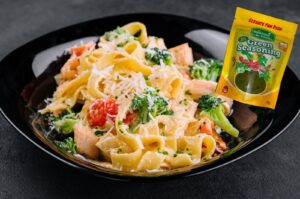
That is where BackYard Blendz Green Seasoning fits best. It gives home cooks a practical fresh-herb base for chicken, fish, vegetables, soups, stews and rice dishes. It can help build flavour early in the cooking process while leaving the cook in control of whatever additional salt, sauces or seasonings go into the meal.
For the broader context, see Healthy Caribbean Cooking: Flavour Without Compromise and our complete guide to green seasoning.
Green Seasoning
Cook With Real Caribbean Herbs
Fresh flavour from chive, garlic, thyme, ginger, celery, pimento pepper and chadon beni.
Shop Jerk Seasoning
Sources and further reading
This article discusses food, traditional use and published research for general information. BackYard Blendz seasonings are foods, not medicines, and are not intended to diagnose, treat, cure or prevent disease.